Barriers To Opportunity
Clean Water Access | Menstrual Health Equity
Understanding the Need
Across East Africa, women and children face daily barriers that limit their education, health, and economic opportunity. Long walks for water, unsafe sanitation, and limited access to menstrual hygiene products create conditions that keep families in a cycle of vulnerability.
These challenges touch every part of life — from a child’s ability to attend school to a woman’s ability to earn an income and care for her family.
Understanding these barriers is the first step toward breaking them — and building communities where every child, girl, and family has the chance to bloom.
.
Nobody should have to choose between their basic needs and their future.

The Clean Water Crisis
Zanzibar, Tanzania
1.5 million
people in Zanzibar currently lack access to clean water
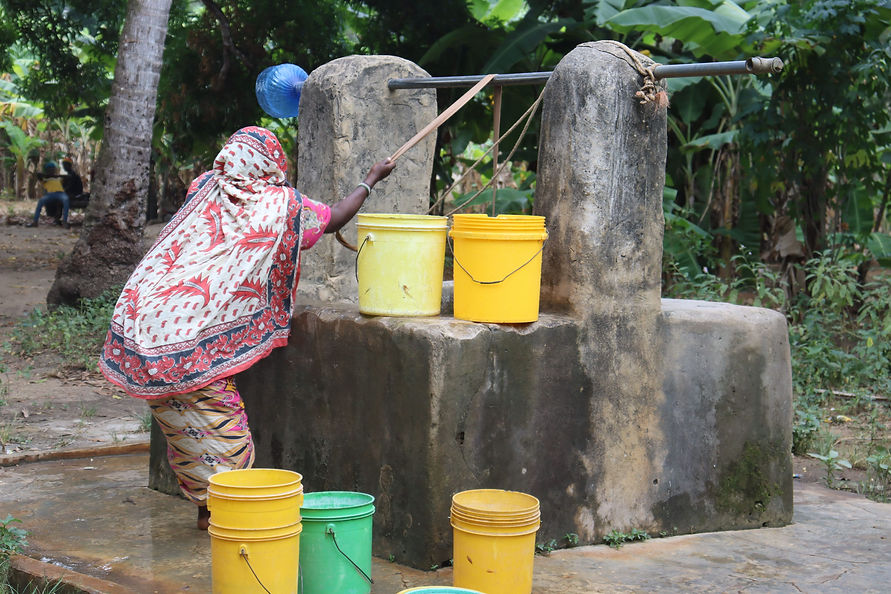
Many women and children spend a large portion of their day collecting water - limiting the time available for school, work, and care.
Unsafe water sources also increase the risk of waterborne illness, fatigue, and long-term health complications.

_JPG.jpg)
Why Clean Water?
Clean water shapes every part of daily life. Yet in Zanzibar, many families rely on unsafe or distant water sources, making simple routines—cooking, cleaning, caring for children—difficult and sometimes dangerous.
The effects ripple outward. Preventable illnesses become common, school days are missed, and households lose valuable time that could be spent on education or income.
Through community-driven partnerships, Bloom Together Collective works to strengthen direct access to safe, dependable water solutions. Our goal is simple: to support healthier families and create the conditions where children can learn, women can earn, and entire communities can move toward long-term stability.
43%
of families rely on water sources that do not meet global safety standards
58.5%
of households in Zanzibar lack access to proper handwashing facilities
39%
of households lack consistent access to a basic water supply
What Clean Water Restores
Clean water isn’t only about health — it restores dignity, safety, and emotional peace. Families no longer have to make impossible choices between basic needs, mothers feel secure knowing their children are safe, and daily life becomes more predictable.
With steady water access, households can plan, save, and build toward the future instead of simply coping with crisis. This stability strengthens the entire community, allowing every generation to move forward with confidence.
"
My wife is very sick and unable to manage any water-related tasks. I face many challenges in making a better life. It has been very difficult for us here.
- Yusef, Chaani, Zanzibar
"


The Menstrual Health Crisis
Uganda

1.8 million
women and girls in Uganda currently lack access to basic menstrual products
Without proper supplies, girls often miss several days of school each month, falling behind in their education. Many resort to unsafe alternatives that cause infections, discomfort, and shame.
The lack of menstrual support creates long-term barriers to health, confidence, and opportunity.
What is Period Poverty?
Period poverty is not just a lack of pads - it is a barrier that touches every part of life. For many women and girls in Uganda, menstruation becomes a monthly obstacle to education, work, and overall wellbeing. Without access to safe products, many resort to soil, paper, or old rags -solutions thatlead to infections, discomfort, and preventable health issues.
The effects rip These challenges extend beyond hygiene: girls miss school, fall behind in their studies, and often have no choice but to drop out entirely. Women face daily limitations that affect their ability to work and care for their families. The result is a cycle that impacts dignity, economic opportunity, and long-term wellbeing.

78%
of women and girls in Uganda lack access to sanitary pads
86%
of girls in Uganda miss school during their menstrual cycle
25%
of girls drop out of school entirely once they begin menstruating
The Power of Safe Menstrual Care
Menstrual health is more than access to products — it is access to dignity, confidence, and stability. When girls have reliable support, the fear and stigma surrounding periods begin to fade, and school becomes a place where they can fully participate.
Cultural stigma and misinformation leave many girls confused or unsupported during their periods. But with proper education and safe menstrual products, they no longer have to worry about leaks, discomfort, or missing class. Instead, they can focus on learning, growing, and building the future they deserve.
"
- Teacher, Namutumba, Uganda
"
Some of our girls fear coming to school because they don't have enough materials to use while at school.
